Ceiling Cassette Comparison · 2026
Best DIY Ceiling Cassette Mini Splits in 2026
If you're shopping for a ceiling cassette mini split in 2026, this guide compares the ceiling cassette options from Zone Air, MrCool, Pioneer, and Cooper & Hunter and helps you decide whether a DIY install or professional installation makes more sense for your project.
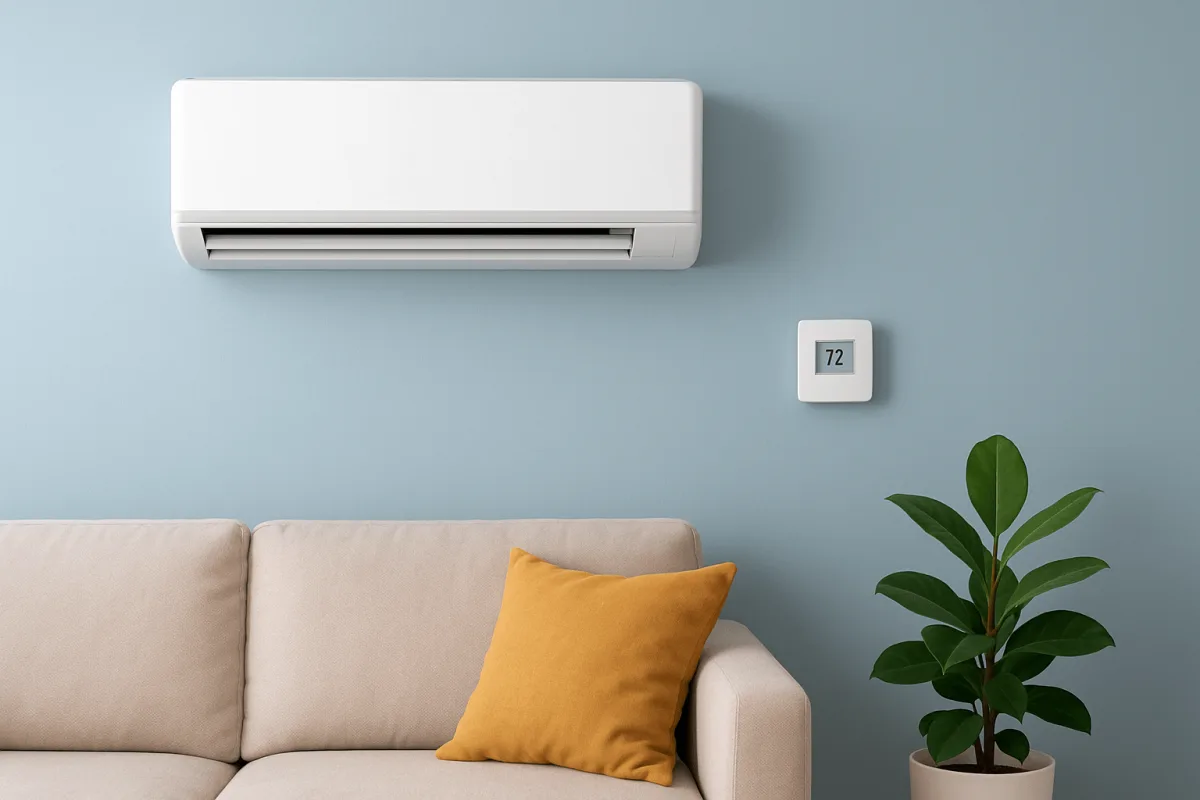
Our pick for a DIY ceiling cassette is Zone Air: pre charged line sets, R454B refrigerant, heating to −13°F, and a warranty that doesn't require a licensed installer. MrCool is the other true DIY cassette brand. Pioneer offers value if you're hiring a pro for the refrigerant work, and Cooper & Hunter Hyper Heat is the pro-install choice for extreme cold.
The Short Version
Fast Answer: Best DIY Ceiling Cassette Mini Split in 2026
Which ceiling cassettes are true DIY?
Zone Air and MrCool. Both sell ceiling cassette systems with pre charged quick-connect line sets, so a homeowner can install them with no vacuum pump, no flaring, and no EPA certification. Pioneer and Cooper & Hunter ceiling cassettes are not true DIY: they use traditional flared line sets that need a vacuum pump and an EPA Section 608 certified technician.
Where does MrCool fit?
MrCool also sells true DIY cassette systems with pre charged line sets, and its DIY models are rated for heating down to −22°F. We cover it below, after the three brands in this table.
Here's how Zone Air, Pioneer, and Cooper & Hunter compare at a high level:
| Feature | Zone Air (DIY) | Pioneer (Pro-Lean) | Cooper & Hunter Hyper Heat (Pro Only) |
|---|---|---|---|
| DIY suitability | True DIY, pre charged lines, quick connect fittings | Homeowner can mount, but refrigerant work needs a pro | Full professional install required |
| Refrigerant | R454B | R410A (many models), R454B in newer lines | R410A in many; R454B in select new models |
| Cold climate heating | Down to −13°F | Limited low-ambient performance | Down to −22°F |
| Typical single-zone installed price | $2,700–$3,500 (DIY) | $3,500–$5,500 (with pro install) | $5,000–$8,000+ (with pro install) |
This guide focuses specifically on ceiling cassette indoor units, not generic wall-mounted DIY mini splits. The ceiling cassette is an entire category of its own, with unique installation demands and airflow advantages that deserve dedicated attention.
How It Works
How Ceiling Cassette DIY Mini Splits Work
A ceiling cassette is an indoor air handler that recesses into your ceiling, leaving only a flat grille visible from below. Unlike a wall unit that hangs on the wall or a floor mounted air handler that sits near the floor like baseboard heaters, a ceiling cassette disappears into the architecture of your room.
Here's the basic setup of how mini splits work: one outdoor unit (the heat pump and compressor) connects to one or more indoor units through refrigerant line sets and control wires. The outdoor condenser handles the heavy lifting of heating or cooling refrigerant, while the indoor units distribute conditioned air.
Ceiling cassette air handlers provide 360-degree air distribution or 4-way airflow, pushing conditioned air outward in every direction. This makes them ideal for large rooms, open concept layouts, and spaces where a wall unit would look out of place or restrict airflow. Ceiling cassette units provide even air distribution which is essential for comfort in conditioned spaces.
DIY-friendly models ideally avoid vacuum pumping and refrigerant charging for straightforward installations. True DIY mini split systems use pre charged line sets that snap together with quick connect fittings, so you never touch refrigerant. Pre charged line sets eliminate the need for vacuum pumps entirely.
By contrast, traditional central HVAC systems rely on a large air handler and long duct runs throughout your home, losing efficiency at every joint, bend, and unsealed seam. A ceiling cassette mini split system bypasses all that ductwork, delivering conditioned air right where you need it.
At a Glance
Ceiling Cassette Options at a Glance
The leading DIY-friendly ceiling cassette mini splits differ mainly in installation approach and performance. Here's where each fits:
Our Pick
Zone Air DIY Ceiling Cassette
Zone Air is our recommendation for a DIY ceiling cassette. They've built their entire product line around making ceiling cassette installation accessible to homeowners who own basic hand tools and a free weekend.
Key specs that matter:
Zone Air uses pre charged quick-connect line sets sold separately so you only pay for the length you need. This makes them a true diy system: no vacuum pump, no EPA license, no refrigerant handling. Installation typically takes 4-6 hours.
Available configurations include single zone cassette sizes in 9,500 and 12,000 BTU, plus multi-zone packages. Their 3-zone 36,000 BTU system feeds three 12k cassettes from one outdoor condenser, covering up to roughly 1,800 square foot in mild climates. You can also build systems with multiple indoor heads by mixing ceiling cassette heads with wall-mounted indoor units on the same condenser.
Equipment cost for the single-zone 9,500 BTU cassette starts at $2,469.99, with line sets adding $230–$700. Compare that against professional installation costs of $5,000–$8,000 for a similar system, and the labor savings are substantial. Zone Air's warranty (5-year parts, 7-year compressor warranty) explicitly does not require a licensed installer, so your warranty coverage stays intact with a self install.
Pro-Lean Value
Pioneer Ceiling Cassette Systems: Best Value if You'll Hire a Pro
Pioneer is not a true DIY cassette brand (unlike Zone Air, whose cassettes use pre charged quick-connect line sets), but it's a strong option for budget-conscious buyers who plan to hire a local hvac guy or who have enough experience to rent hvac tools and handle flared connections. Pioneer units typically require standard professional vacuuming and line evacuation for installation.
What makes Pioneer attractive is consistent value pricing compared with other mini split brands. A 9,000 BTU ceiling cassette full system runs around $2,000–$2,500 for equipment, placing it below Zone Air's equipment cost in many cases. Pioneer offers 8-way airflow options and strong energy efficiency near the low-to-mid 20 SEER2 range.
The catch: systems ship without pre charged line sets. That means flaring copper lines, pulling a vacuum pump, and handling refrigerant, all of which require an hvac technician or EPA Section 608 certification. Regular professional installation is often required for Pioneer models to preserve warranty.
Efficiency runs in the high teens to low 20s for SEER2. Pioneer mini splits can achieve a SEER2 rating of 23 in their newer Quantum Ultra lines, and HSPF is around 10.0 in many models. Cold-weather heating is decent but doesn't match hyper heat competitors, with many R410A models losing significant capacity below freezing.
The tradeoff is clear: low sticker price on equipment, but higher total installed cost once you factor in install labor, refrigerant work, permits, and an electrician for the electrical hookup. In mild to moderate climates where winter heating demands are modest, Pioneer remains a solid value proposition. Pioneer's refrigerant transition page confirms that newer models are shifting toward R454B and R-32, so future options will improve.
Cold Climate Benchmark
Cooper & Hunter Cassette Hyper Heat: Cold Climate Pro Benchmark
Cooper & Hunter excels in cold climate heating with hyper heat cassette systems, delivering performance that neither Zone Air nor Pioneer can match at extreme low temperatures. Cooper & Hunter's cassettes are not diy mini splits, though (Zone Air's are). They require full professional installation from start to finish.
The headline number: Cooper & Hunter's Hyper Heat operates effectively down to −22°F, making these systems ideal for northern states, mountain regions, and parts of Canada where winter heating is the primary concern. Cooper & Hunter's HSPF2 rating is 13, indicating high heating efficiency that translates directly to lower operating cost during the coldest months.
Cooper & Hunter ceiling cassettes feature competitive pricing and good low-temperature heating capability, though equipment costs run higher than entry-level competitors. A 4-zone one-way cassette system at 28,000 BTU runs SEER2 around 23, EER2 of 13, and uses R454B in the newer configuration. Indoor unit noise levels sit in the 33–41 dB range depending on fan speed.
Many 2026 Cooper & Hunter models still use R410A, which may face long-term refrigerant phase-down impacts. Installation must be done by a licensed hvac tech using traditional line sets, a vacuum pump, and gauges, pushing installation costs significantly higher than DIY solutions.
Think of Cooper & Hunter as the performance reference point. When comparing Zone Air and Pioneer for your project, ask yourself: do I need heating down to −22°F? If not, a −13°F-rated true DIY system and its labor savings likely make more sense. If you live in USDA Climate Zone 6 or 7 and depend on your heat pump as the primary heating source, Cooper & Hunter's hyper heat models earn their premium.
True DIY Alternative
MrCool DIY Ceiling Cassette Units
The MrCool DIY line offers true DIY installation with pre charged line sets, and MrCool's 5th Gen uses R454B refrigerant, meeting EPA 2025 standards. MrCool mini splits offer SEER2 ratings up to 22. MrCool's DIY systems can be installed in 4-6 hours, and MrCool's systems are designed to fit between standard 16-inch ceiling joists for flush installations. MrCool DIY models include strong cold-weather performance with heating capabilities down to −22°F.
Where MrCool falls short for some buyers is support. Its Trustpilot profile shows 3.2 out of 5 across 89 reviews (September 2026), and on a cassette install, where the ceiling stays open until the job is done, a slow parts or warranty response is more disruptive than on a wall unit.
Best for: DIY buyers in colder climates who want MrCool's −22°F-rated models, or a cassette designed to fit between standard 16-inch ceiling joists.
DIY vs Pro
DIY vs Pro Install: What "True DIY Ceiling Cassette" Means
There's a big difference between marketing language that says "easy install" and a system that's genuinely designed for homeowner installation. Many mini split brands advertise simplicity, but the details reveal whether you'll actually need a professional installer.
A true diy system means:
Homeowners can install pre-charged systems without HVAC certification, and pre charged line sets reduce the risk of refrigerant leaks compared with field-flared connections. Warranty coverage and overall performance are also best when the system is installed correctly.
Some "DIY-leaning" systems like Pioneer can be physically mounted by homeowners-you can hang the indoor units and set the outdoor unit on a pad-but you still need a pro to handle the refrigerant side. That means renting or buying a vacuum pump, manifold gauges, and either holding an EPA Section 608 certification or hiring someone who does. That's not truly a self install.
Even with true DIY equipment, ceiling cassette indoor units have extra complexity compared with simple wall-mounted air handlers. You're dealing with:
An electrician or permit may still be required for the dedicated circuit and disconnect, depending on your local codes. The refrigerant side is handled, but the electrical hookup and structural work still need attention.
Sizing
Choosing the Right Size: BTU, Square Footage, and Ceiling Height
Proper sizing matters more for ceiling cassette systems than wall units because cassettes often serve large, central spaces where being wrong means the whole room is uncomfortable. An oversized unit short cycles, wasting energy and failing to dehumidify. An undersized unit can't keep up.
The common rule of thumb: roughly 20 BTU per square foot for rooms with average insulation and 8–9 foot ceilings. In practice:
You'll need to upsize beyond these numbers if you have high ceilings (above 10 feet), poor insulation, large window areas, or live in a hot climate. A master bedroom with vaulted ceilings and south-facing windows might need a 12k unit even though the square foot count suggests 9k.
Zone Air and other major mini split brands provide online BTU calculators that factor in these variables. For multi zone systems, the outdoor condenser needs to deliver enough capacity for all connected indoor units under expected peak load.
A single zone cassette works well for one big open-plan living area. If you have multiple rooms that are compartmentalized with doors and walls, multiple smaller indoor units (or a mix of cassette and wall heads) may be the smarter approach.
Zones
Single Zone vs Multi-Zone Ceiling Cassette Setups
The choice between single zone and multi-zone setups comes down to how many spaces you need to condition and how much complexity you're willing to take on.
Single zone means one outdoor condenser powering one ceiling cassette. This is the simplest configuration: shorter line sets, smaller breaker, fewer controls, and the lowest equipment cost. Ideal for an open living room, a finished basement, a workshop, or a commercial space like a salon or studio. Each indoor unit gets its own thermostat.
Multi-zone means one outdoor unit feeding two to five indoor units across several rooms. Multi-zone systems can mix different indoor unit types-say, a ceiling cassette in the living room, a wall unit in the master bedroom, and another wall unit in a home office. This saves outdoor space (you only need one outdoor condenser instead of multiple) and can reduce total capacity needs.
The tradeoffs are real:
Zone Air's diy mini splits allow mixing indoor units on certain condensers with the same pre charged quick-connect approach. Pioneer and Cooper & Hunter typically design their multi zone systems for pro install, requiring traditional flared connections and refrigerant work across all zones.
Indoor Unit Styles
Ceiling Cassette vs Wall-Mounted and Ducted Indoor Units
Choosing the right indoor unit style matters as much as choosing the right brand. Here's how the three main options compare in 2026:
Ceiling cassette advantages: Flush, nearly invisible look with only the grille showing. Delivers 360° or 4-way airflow, ideal for open spaces and rooms with limited wall space. No wall real estate consumed. True DIY ceiling cassette systems are less common among major brands than wall-mounted systems, but they're growing in availability.
Wall-mounted air handler pros: Wall mounted air handlers are the most popular type for good reason. Simplest install, lowest cost, easiest for diy mini splits, and the best fit for bedrooms and small single-room zones. If you just need to cool one room and have open wall space, a wall unit is the smarter choice.
Concealed ducted indoor units: Best for hidden installations where you want zero visible hardware. A ducted head sits in the ceiling or attic and pushes air through short duct runs to multiple small rooms. More complex to install, but great for hallways serving two or three bedrooms.
Floor mounted air handlers sit near the floor like baseboard heaters and work well in rooms with large windows and no wall space, but they don't distribute air as evenly as cassettes.
When is a ceiling cassette worth the extra labor? Open concept living areas, kitchens where wall space is occupied by cabinets, commercial spaces where appearance matters, and rooms where you want even temperature throughout without a visible unit. When it's not worth it: small bedrooms, spaces without ceiling access, or one room additions where a wall unit does the job faster and cheaper.
Features
Key Features to Look for in 2026 Ceiling Cassette Mini Splits
Not all ceiling cassettes are created equal. Here's what to evaluate beyond brand name:
Efficiency metrics: SEER2 measures cooling efficiency, HSPF2 measures heating efficiency. Higher SEER2 ratings lead to lower operating costs. For context, Zone Air hits SEER2 up to 24, while many older central HVAC systems sit in the 13–16 SEER range. The monthly operating cost difference can be substantial over a 10–15 year lifespan.
Cold climate / low-ambient heating: Check the minimum operating temperature for winter use. If you need winter heating below 0°F, look for hyper heat models or units specifically rated for low-ambient operation. This matters far more than SEER2 if heating is your primary need.
Smart controls: Wi-Fi integration, smartphone apps, voice assistant compatibility (Alexa, Google), and scheduling let you manage multi-zone comfort from your phone. Cooper & Hunter tends to include built-in Wi-Fi; Pioneer often requires optional adapters.
DIY-friendly installation features: For diy mini splits, prioritize pre charged line sets, easy-access washable filters, built-in condensate pumps, multi-directional louvers, and panels that hinge down for maintenance. Noise levels for ceiling cassettes are typically competitive and vary by brand and model, with indoor units typically operating at noise levels around 28–32 dB in quiet modes.
Refrigerants
R454B vs R410A: Refrigerants and Future-Proofing Your System
Refrigerant choice directly affects how long your system stays serviceable and how much maintenance will cost over its lifetime.
R410A is being phased down under the EPA AIM Act, with production quotas tightening through the 2030s. R410A has a global warming potential (GWP) of about 2,088. As supply shrinks, the price of R410A for recharges and repairs will climb, and availability will drop.
R454B has a GWP of approximately 466, roughly 78% lower than R410A. Zone Air uses R454B across its entire ceiling cassette lineup, which means better long-term parts support and compliance with tightening regulations. Pre charged line sets reduce the risk of refrigerant leaks during installation, keeping that lower-impact refrigerant where it belongs.
Many Pioneer and Cooper & Hunter models still rely on R410A, which is safe and effective for now but less future-proof. Both brands are transitioning newer lines to R454B, but legacy models on dealer shelves may still ship with R410A.
For homeowners planning to keep systems 10–15 years, R454B diy mini splits are the smarter buy. You'll avoid the cost squeeze as R410A becomes harder to source, and your system will remain compliant with whatever regulations come next.
Costs
Real-World Installation Costs: DIY vs Contractor
Equipment cost is only half the picture. Installation costs often determine whether a DIY approach actually saves you money or just shifts the expense.
Contractor labor ranges for ceiling cassette installs in 2026:
| Scenario | Equipment Cost | Install Labor | Total Installed Cost |
|---|---|---|---|
| Zone Air 9.5k BTU single zone (DIY) | ~$2,700 (with lineset) | $0–$500 (electrical, helper) | ~$2,700–$3,200 |
| Pioneer 9k BTU single zone (pro install) | ~$2,000–$2,500 | $1,500–$3,000 | ~$3,500–$5,500 |
| Cooper & Hunter 12k BTU Hyper Heat (pro) | ~$3,000–$4,500 | $2,000–$3,500 | ~$5,000–$8,000 |
DIY mini splits can save homeowners thousands in installation costs. True DIY systems can reduce total installed cost by 30–60% by eliminating refrigerant labor, leaving only the electrical hookup and structural ceiling work.
Pioneer and Cooper & Hunter gear may have a lower sticker price on the equipment alone, but they end up similar or more expensive once you add a pro install, permit fees, and refrigerant work.
Example scenarios:
Hidden costs to watch: ceiling repairs if you lack attic access, condensate pump installation, permits, and the cost of mistakes. Even with DIY equipment, budget for an electrician if your local code requires licensed electrical work.
vs Central HVAC
How Ceiling Cassettes Compare to Central HVAC and Air Handlers
When should you consider a ductless ceiling cassette instead of upgrading your central air handler? More often than you might think.
Central HVAC relies on one big air handler and ducts running through walls, floors, and ceilings. Every duct joint, every bend, every foot of unsealed run loses efficiency. Studies consistently show duct losses of 20–30% in typical homes, especially with aging ductwork in unconditioned attics or crawlspaces. A mini split system places indoor units directly in the rooms they serve, cutting those losses entirely.
Efficiency gains with ductless mini splits are often 20–40% better than older central AC systems, and zone-by-zone control means you're not cooling or heating empty rooms. Each zone gets its own thermostat, so the master bedroom can be 68°F while the living room stays at 72°F.
Ceiling cassette mini splits shine in retrofit scenarios:
In large new-build homes with well-designed ducts, central HVAC may still make sense as the primary system. But even there, ceiling cassette mini splits can complement or replace it room by room-adding a cassette to a poorly served great room or home office without touching the existing ductwork.
Other Brands
Other Mini Split Brands to Know (and When They Make Sense)
While the focus of this guide is Zone Air, Pioneer, and Cooper & Hunter, you'll encounter other mini split brands during your 2026 research.
Premium pro-install brands: Mitsubishi, Fujitsu, Daikin, and LG all offer ceiling cassette systems with excellent long-term reliability and the quietest operation in the industry. None offer pre charged DIY lines. Installation requires a licensed professional installer, and equipment plus labor costs run significantly higher than the brands we've profiled. These make sense when budget isn't the constraint and you want a contractor-backed installation with brand-name support.
Budget alternatives: Senville offers some cassette options with newer refrigerants, but documentation, warranty coverage clarity, and local support lag behind the brands profiled here. Della's Hyper Heat is rated to heat at −13°F and shows up in budget searches, but availability and parts support vary.
For DIY-minded homeowners, the true DIY cassette brands (Zone Air and MrCool) avoid refrigerant labor entirely. Other mini split brands become more relevant only when a full pro install is already planned and budget allows for premium equipment.
Avoid anonymous import brands with no AHRI listing or US support. This is particularly important for ceiling cassette systems, which are harder to service than wall units. If you can't find replacement panels, filters, or condensate pumps, you'll regret saving $300 on a big box store no-name unit.
FAQ
FAQ: DIY Ceiling Cassette Mini Splits in 2026
Get Started
How to Get Started Picking Your 2026 Ceiling Cassette Mini Split
The core decision comes down to two questions: are you doing a diy install or hiring a pro, and how cold does your climate get?
If you're DIY and your climate doesn't regularly drop below −13°F, Zone Air is our pick, with MrCool as the other true DIY option. If you're hiring a pro and want the lowest equipment cost in a moderate climate, Pioneer delivers. If you're in a cold climate and need a heat pump that keeps working at −22°F, Cooper & Hunter's Hyper Heat is the performance benchmark.
Follow this simple 3-step process:
If you're leaning DIY, compare the pre charged cassette packages from Zone Air and MrCool on size, line set length, and warranty terms. Consulting brand support or a local HVAC pro for a quick load check is wise before buying a multi-zone or large single zone system-a 15-minute phone call can prevent buying the wrong size.
Systems built on R454B refrigerant, high SEER2 efficiency, and ceiling cassette versatility today should remain a smart investment well into the 2030s. The refrigerant regulations aren't getting looser, energy costs aren't getting lower, and the gap between DIY and pro install pricing isn't getting smaller.
Specifications, prices, warranty terms, rebate rules, and review figures cited here are manufacturer-published or third-party-published as of September 2026, are subject to change, and should be verified with the manufacturer before purchase. Trustpilot ratings reflect user-submitted reviews, not our own testing. MRCOOL®, Pioneer®, and Cooper & Hunter® are trademarks of their respective owners; Best DIY Mini Split Brands is not affiliated with or endorsed by any of them.
Keep Reading
Related Guides
Best DIY 3 Zone Mini Split
Sizing, true-DIY status, cold-climate ratings, and cost for a three-room install.
Read the guide →Best Multi-Zone Mini Split Systems
One condenser, 2 to 5 heads — how multi-zone systems work, how to size them, and the DIY options.
Read the guide →Best Pre-Charged Mini Splits
What "pre-charged" really means, the true quick-connect shortlist, and pre-charged vs flare.
Read the guide →DIY Mini Split Installation Guide
The full step-by-step walkthrough — planning, mounting, connections, and startup.
Read the guide →