Brand Review · 2025–2026
MRCOOL DIY 5th Gen Review
This mrcool diy 5th gen review covers the current flagship of MRCOOL's DIY mini split line — what changed from the 4th Gen, what it costs in 2025–2026, and whether the pre-charged, no-vacuum install still holds up once the weather turns cold. Short version: it's the most complete DIY system MRCOOL has shipped, and the R-454B switch finally drags the lineup onto current refrigerant.
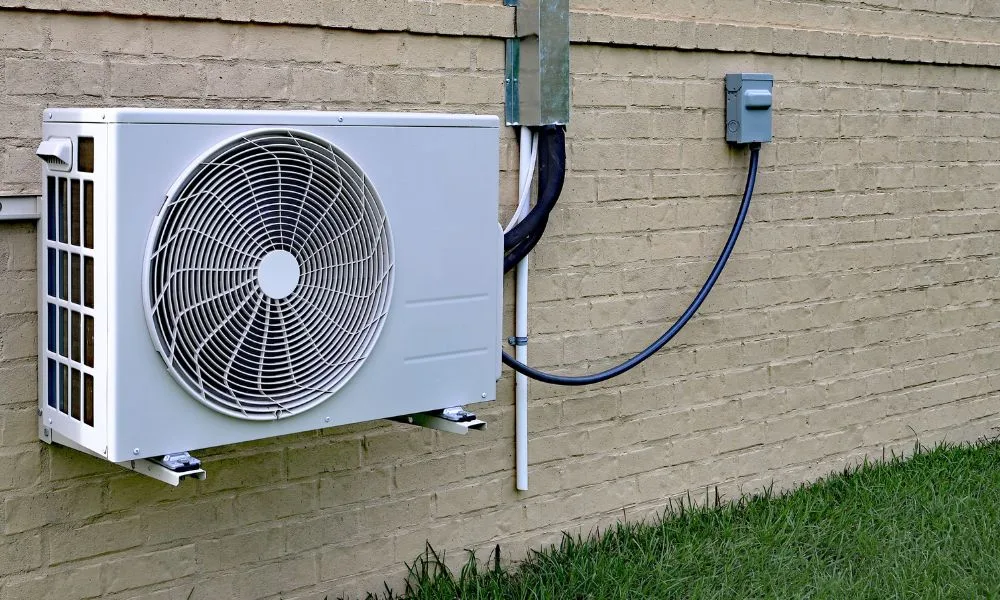
The MRCOOL DIY 5th Gen is a true-DIY mini split: pre-charged R-454B No-Vac Quick Connect line sets install with no vacuum pump and no EPA license, efficiency runs 23.5–23.6 SEER2 on the popular 9K–12K models, it heats down to −13°F, and the 5-year parts / 7-year compressor warranty stays valid on a homeowner install. A 12,000 BTU 115V complete system runs roughly $1,900–$2,000 at Home Depot or Lowe's (verify current listings, as of July 2026).
Quick Verdict
Our Verdict on the MRCOOL DIY 5th Gen
MRCOOL more or less invented the pre-charged, quick-connect mini split, and the 5th Gen is the version that fixes the nagging complaints about the older ones. WiFi is built in instead of a $60 dongle. The refrigerant is finally current. The Quick Connect fittings got redesigned seals and a line set that bends without fighting you. None of that is revolutionary — it's a steady, sensible refresh — but it's the DIY system we'd point most homeowners to when they ask about MRCOOL by name.
Where it earns its keep is the install and the warranty. You can put one of these in over a weekend with hand tools and a torque wrench, and MRCOOL is one of the few brands that won't void your coverage for doing it yourself. Where it stumbles is the same place MRCOOL always has: post-sale support, and the fact that a botched fitting torque is on you, not a contractor.
| Spec | MRCOOL DIY 5th Gen |
|---|---|
| Install type | True DIY — pre-charged, No-Vac Quick Connect line set |
| Refrigerant | R-454B (low-GWP A2L; replaces R-410A) |
| Efficiency (SEER2) | 23.6 (9K), 23.5 (12K), 22.5 (18K), 22.7 (24K) |
| Heating | Rated to heat at −13°F; HSPF2 ~7.6 on the 12K |
| Cooling range | Steady cooling up to 122°F |
| Single-zone sizes | 9K, 12K, 18K, 24K BTU |
| Voltage | 115V (9K/12K) or 230V (12K/18K/24K) |
| Line set | 25 ft pre-charged Quick Connect; no vacuum pump or EPA 608 |
| Multi-zone | Up to 6 zones, condensers to 55,000 BTU |
| WiFi | Built in (no add-on dongle) |
| Warranty | 5-yr parts / 7-yr compressor; no registration required; DIY honored |
| Price (12K, 115V) | ~$1,900–$2,000 at retail (verify) |
| Certification | Energy Star |
Specs above reflect MRCOOL's published data and major retailer listings as of July 2026; SEER2 varies by exact model and prices change often, so verify current listings before you buy.
What Changed
MRCOOL DIY 5th Gen vs 4th Gen: What's Actually New
If you already own a 4th Gen and it's running fine, none of this is a reason to rip it out. If you're buying today, here's what the newer generation gets you.
| Category | DIY 4th Gen | DIY 5th Gen |
|---|---|---|
| Refrigerant | R-410A (being phased out) | R-454B (current low-GWP standard) |
| Zones / condenser | Up to 5 zones | Up to 6 zones, condensers to 55,000 BTU |
| WiFi | Add-on dongle (~$60) | Built in, no extra cost |
| Quick Connect | Original fittings | Redesigned leak-proof seals, more flexible line set |
| Comm cable | Standard wiring | New DIYPro communication cable |
| Wall head | Thicker profile | ~1″ shallower, lower operating dB |
| New options | — | Adds 6K air handlers + ceiling cassettes |
| Warranty | 5-yr parts / 7-yr compressor | Same (5-yr parts / 7-yr compressor) |
The refrigerant change is the one that actually forces the decision. Manufacture and import of R-410A residential systems ended January 1, 2025 under the AIM Act, so the R-454B in the 5th Gen isn't a marketing bullet — it's the reason the line still exists on shelves. Remaining pre-2025 R-410A stock can still be installed: an EPA final rule effective July 27, 2026 lifted the planned installation ban and lets that inventory be used until it's depleted, with New York the exception. We break the timeline down in our Energy Star cold climate guide to the 4th Gen and 5th Gen. Everything else is quality-of-life: the built-in WiFi and the flexible line set are the upgrades owners notice first. For a deeper look at the fittings, see our MRCOOL pre-charged line sets guide, or read our MRCOOL DIY 4th Gen review if you're weighing closeout 4th Gen stock against a new unit.
The DIY Install
Pre-Charged, No Vacuum, Quick Connect: What You Actually Do
The whole reason to buy MRCOOL is that the refrigerant circuit stays sealed from the factory to startup. That's what makes it a homeowner job instead of a contractor one.
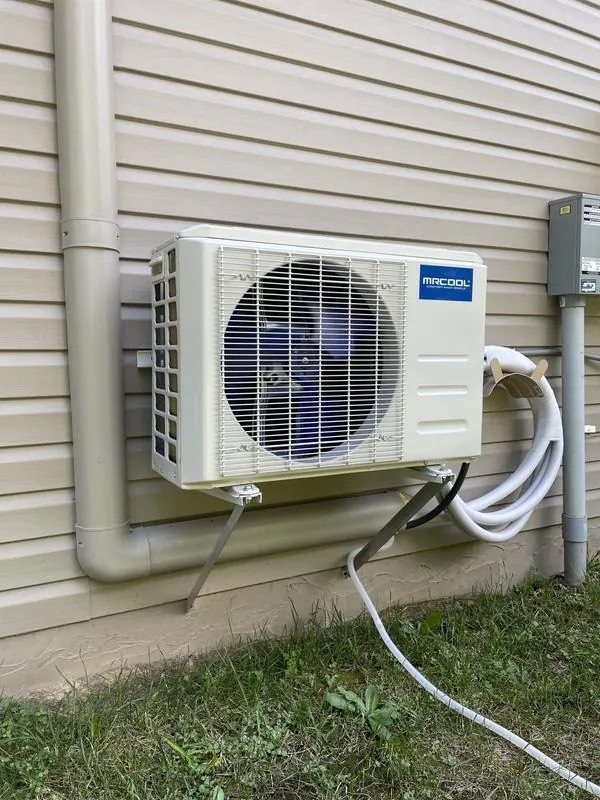
A single-zone MRCOOL DIY 5th Gen install is mostly carpentry and wiring, not HVAC. You mount the indoor head on its bracket, drill a 3–3.5″ pass-through, set the outdoor condenser on a pad or wall bracket, unroll the 25 ft pre-charged Quick Connect line set, hand-thread and torque the fittings, run the DIYPro communication cable and drain, then power it up. There's no vacuum pump to rent, no manifold gauges, no nitrogen purge, and no EPA 608 certification — the refrigerant never leaves the sealed loop. A confident DIYer can knock out a 9K–12K unit in an afternoon; budget more like 4–8 hours for a first install and add a licensed electrician if you need a new circuit.
The Quick Connect fittings are the make-or-break step, and MRCOOL redesigned them for the 5th Gen with leak-proof seals. Real owners back that up: an installer on The Garage Journal reported doing a 36K multi-zone setup and leak-testing every connection across different run cycles without finding a single leak, adding that the units "easily held temp in my shop even when it got down to 12F." The catch is torque — the failures you read about almost always trace back to a fitting that wasn't seated to spec. Buy or borrow a proper torque wrench and follow the number in the manual; don't eyeball it.
Performance
Efficiency, Cold-Climate Heat & the R-454B Question
Brochure numbers are one thing; here's how the 5th Gen behaves in the situations people actually buy it for.
The Field
How the MRCOOL DIY 5th Gen Stacks Up in the DIY Field
Among systems a homeowner can genuinely install, only a couple skip the vacuum pump entirely. MRCOOL and Zone Air are the two clear pre-charged, no-vacuum options; Senville and Pioneer are cheaper but are traditional flare installs that still need a vacuum and refrigerant handling. Here's the honest lay of the land.
| Brand | Install | Refrigerant | Efficiency | Cold-climate | Notes |
|---|---|---|---|---|---|
| MRCOOL DIY 5th Gen | True DIY (pre-charged) | R-454B | Up to 23.6 SEER2 | To −13°F | Hyper Heat option; large install-video library |
| Zone Air | True DIY (pre-charged) | R-454B | Up to 24 SEER2 | To −13°F | Direct-to-consumer; warranty valid on DIY install |
| Senville | Flare (vacuum req.) | Varies | ~17–21 SEER2 | Limited | Budget, wide model range |
| Pioneer | Flare (vacuum req.) | Varies | ~17–20 SEER2 | Limited | Budget, for tool-equipped DIYers |
MRCOOL's practical edge is support content: there are thousands of install videos and forum threads for whatever question you hit at 9pm mid-project. Zone Air is the closest like-for-like alternative on the pre-charged, no-vacuum front and publishes a slightly higher SEER2 ceiling, while Senville and Pioneer compete on price but aren't truly plug-and-play. If you want the whole ranking with the reasoning, see our guide to the best DIY mini split brands.
Honest Limitations
Where the MRCOOL DIY 5th Gen Falls Short
Across the big review sets, MRCOOL DIY units average around 4.2 out of 5 over thousands of owner ratings, and the pattern is consistent: people like the hardware and grumble about support. The most common complaint isn't a failed compressor — it's slow or frustrating customer service when something does go sideways, especially when a third-party reseller sits between you and MRCOOL.
A few more things to go in with your eyes open. The pre-charged line set is a fixed 25 ft and must not be cut, so long or awkward routing — or a complex 4–6 head layout — can still push you toward a field-charged install by a pro. Returns are seller-dependent rather than a manufacturer guarantee (MRCOOL's own DIY Direct runs about 15 days, and restocking fees are common), so buy the right size the first time. And the Extended Limited Lifetime Replacement compressor coverage isn't free — it requires enrolling in the paid Care Kit program (around $63 plus tax, billed twice a year).
Pros
- Genuine no-vacuum, pre-charged DIY install
- Current R-454B refrigerant, future-proof
- High SEER2 on the 9K/12K, Energy Star across the line
- Warranty honored on a homeowner install, no registration required
- Large library of install videos and forum help
Cons
- Post-sale support is the recurring complaint
- Leak-free result depends on getting fitting torque right
- Fixed 25 ft line set; can't be cut or extended freely
- Returns are seller-dependent, restocking fees common
- Standard line needs Hyper Heat for the harshest winters
Bottom line: if you want a true-DIY mini split with current refrigerant and a warranty that survives your own install, the MRCOOL DIY 5th Gen is an easy recommendation — just get the sizing and the fitting torque right, and keep your purchase receipt. If you want to compare it head-to-head with the other pre-charged options, our brand ranking lays them side by side.
Common Questions
MRCOOL DIY 5th Gen FAQs
Keep Reading
Related Guides
MRCOOL DIY 4th Gen Review
Weighing closeout 4th Gen stock against a new 5th Gen? Here's our full verdict on the older generation.
Read the review →MRCOOL Pre-Charged Line Sets
How the Quick Connect line sets work — sizes, lengths, compatibility, and the torque step that matters most.
Read the guide →MRCOOL Easy Pro 12K vs Pioneer Diamante Pro vs Zone Air 12K
Three 12K heat pumps, two true pre-charged DIY installs — line set lengths, quick-connect joints, SEER2, heating floors, warranty, and real total cost.
See the comparison →Energy Star Cold Climate: MRCOOL 4th Gen vs 5th Gen
What the cold-climate mark really requires and MRCOOL's Region IV vs Region V heating numbers by size.
Read the breakdown →