Voltage & Cost · 2026
110 vs 220 Mini Split: What Actually Costs Less?
The voltage question trips up a lot of first-time buyers. Here's the honest math on running cost, where 110V really saves you money, and when you actually need 220V.
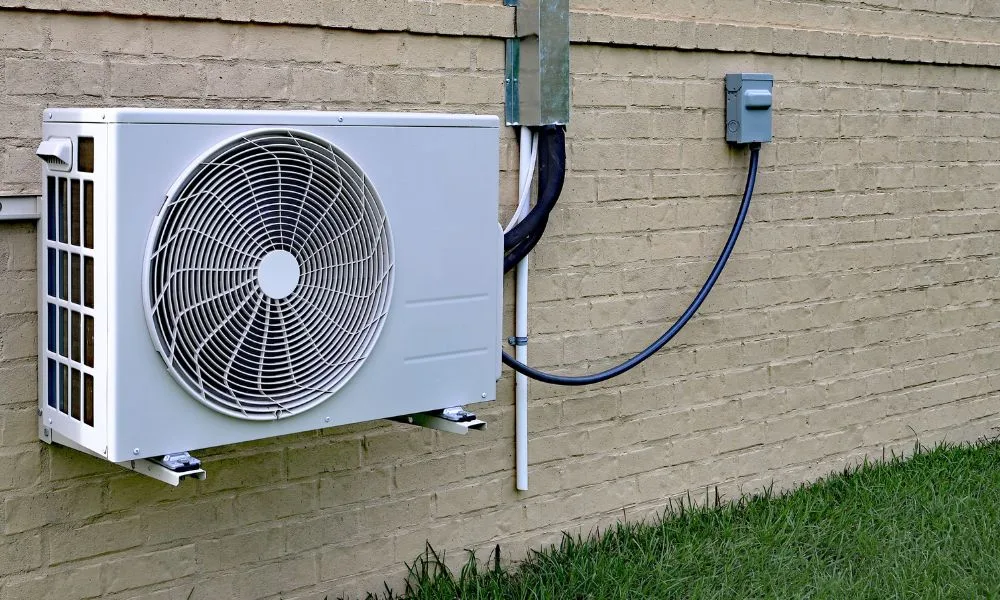
A 110V and a 220V mini split cost the same to run for the same job — operating cost tracks efficiency (SEER2), not voltage. Where 110V wins is installation: it can plug into a standard household outlet, skipping the dedicated 220V circuit an electrician has to run. Choose 110V for single rooms up to ~12,000 BTU; step up to 220V for larger or multi-zone systems.
The Big Question
110 vs 220 Mini Split: Which Is Cheaper to Run?
Short version: neither. This is the most common misconception in the whole voltage debate. People assume a 220V unit either saves money or costs more on the monthly bill — and for a residential mini split, it does neither in any meaningful way.
First, terminology, because the numbers float around: "110V" means the nominal 115–120V circuit in your home, and "220V" means the nominal 208–240V circuit. Manufacturers use 110/115/120 and 220/230/240 more or less interchangeably. What matters is that both deliver the same electrical power to the same equipment — the difference is how, not how much.
Do the Math
Running Cost: The Real Math
Your power bill is measured in kilowatt-hours, and watts are what get consumed. A unit's power draw is voltage times current — so a 110V unit simply pulls more amps to make the same watts that a 220V unit makes at fewer amps. Same watts in, same BTUs out, same kilowatt-hours on the meter.
Concretely: a 12,000 BTU heat pump running at a given SEER2 draws roughly the same power whether it's wired at 115V or 230V, so it'll cost about the same per hour to run. The lever that actually moves your bill is efficiency. A 24 SEER2 unit will cost meaningfully less to operate than an 18 SEER2 unit of the same size — regardless of voltage. Engineers sometimes note 230V has marginally lower line losses, but in a house that difference is a rounding error. If someone tells you to buy 220V "to save on electricity," they've confused voltage with efficiency. For 12K units specifically, see MRCOOL Easy Pro 12K vs Pioneer Diamante Pro vs Zone Air 12K.
Where the Money Is
Install Cost: Where 110V Actually Saves
The real cost difference shows up before the unit ever turns on. A 110V mini split can often plug into an existing standard household outlet on a 15A single-pole breaker — no new circuit, no electrician. For a DIY installer, that can be the difference between a self-contained weekend project and a job that needs a licensed trade.
A 220V system needs a dedicated 208–240V circuit and a double-pole breaker, which usually means paying an electrician to run a new line from the panel. Depending on the distance and your panel's capacity, that's commonly a few hundred dollars and up — and if the panel is full, more. So even though the equipment prices are similar, 110V frequently comes out ahead on total installed cost specifically because it dodges the electrical work. That's the single biggest practical reason to prefer 110V when your load allows it.
Honest Limits
When You Actually Need 220V
110V isn't always an option, and pretending otherwise leads to undersized systems. You need 220V when:
The takeaway: don't force a big load onto 110V to save on wiring. Size the system to the space first, then take the 110V install savings if your BTU need fits within it.
Availability
Which Sizes Come in 110V
The 110V sweet spot is single-zone units up to about 12,000 BTU — the 9,000 and 12,000 BTU sizes that cover a bedroom, home office, garage, sunroom, or small addition. That's where the majority of 115V models live, and it's more than enough cooling and heating for most single rooms. If you've settled on 110V, our comparison of the best 120V / 115V DIY mini splits with pre-charged line sets puts MRCOOL DIY and Zone Air head to head at this voltage.
The range is widening, though. A handful of brands now offer 18,000 and even 24,000 BTU units on 115V, which opens up larger rooms and open-plan spaces without an electrician. If your project is one or two rooms, there's a very good chance a 110V unit covers it. Use a BTU sizing approach to confirm the load before you commit to a voltage.
110V Options
Best 110V Mini Splits
For a single room on 115V, our recommendation is Zone Air: its 115V models come in 9,000 and 12,000 BTU at around 23 SEER2, plug into a standard household outlet, and ship with pre-charged line sets so there's no vacuum pump. The warranty (7-year compressor / 5-year parts) holds on a homeowner install. Its 24 SEER2 models and larger sizes are 230V.
MRCOOL DIY is the other quick-connect, pre-charged brand with 115V models, and it is the easier one to find in stores. Our 115V DIY comparison puts the two side by side, and the best DIY mini split brands rankings cover the wider field.
Common Questions
110 vs 220 Mini Split: FAQs
Keep Reading
Related Guides
Best 120V / 115V DIY Mini Split with a Pre-Charged Line Set (2026)
MRCOOL DIY 4th & 5th Gen vs Zone Air at 115V — SEER2, fixed vs custom-cut line sets, plug-in cord kits, price, warranty, and where 115V stops.
See the comparison →Best DIY Mini Split Brands 2026
The pre-charged DIY brands ranked head to head — install difficulty, efficiency, warranty, and support.
See the rankings →Best Multi-Zone Mini Splits
One condenser, 2–5 rooms — the best pro and DIY multi-zone systems and how to size them.
See the picks →DIY Mini Split Installation Guide
The full step-by-step install walkthrough — planning, mounting, connections, and startup.
Read the guide →