Best DIY Mini Split Brands in 2026 (Real-World Picks for Homeowners)
If you're researching mini splits for a DIY project, the sheer number of brands on the market can make the decision feel overwhelming. Some are genuinely built for homeowners. Others just slap "easy install" on the box and wish you luck. This guide cuts through the noise and ranks the best DIY mini split brands you can actually buy and install yourself in 2026.
Quick Answer
After testing documentation, warranty language, install difficulty, and real-world performance, Zone Air is our top pick for serious DIYers who care about long-term reliability. It's followed by MRCOOL, Pioneer, and Senville as solid alternatives depending on your budget and skill level.
Why these four? Because for DIY installation, what matters most isn't logo prestige. It's whether the brand ships pre-charged or DIY-friendly line sets, provides a straightforward air handler mounting process, includes clear manuals, and actually picks up the phone when you call support. Mini splits do not require ductwork for installation, which is already a massive advantage over central air, but the brand you choose determines whether that advantage translates into a smooth weekend project or a frustrating ordeal.
Here's something most people don't realize: most DIY mini split brands are manufactured by a small set of major overseas producers. The differences between brands come down to warranty coverage, documentation quality, tech support responsiveness, and how genuinely DIY-friendly the system is. Out of roughly ten popular models we evaluated, only three are designed for true DIY installation, while seven require professional installation.
At a Glance
Best DIY Mini Split Brands for 2026
Brand
Best For
The Short Version
Zone Air
Quality-focused DIYers
Best overall — pre-charged, DIY-valid warranty, strong support
MRCOOL
Widest availability
True pre-charged DIY system, broadest size range
Pioneer
Handy homeowners with tools
Best budget option, but mostly traditional (non-pre-charged) installs
Senville
Tight budgets
Lowest entry price, but the warranty requires careful reading
Our Criteria
What Makes a "Best" DIY Mini Split Brand?
For a DIY mini split, the criteria look different than for contractor-installed equipment. Ease of installation and warranty support matter just as much as efficiency numbers — a 30+ SEER2 rating is meaningless if you void the warranty the moment you mount it yourself.
Here are the factors we weigh most heavily:
Pre-charged or DIY-ready line sets that eliminate the need to handle refrigerant, pull a vacuum, or hold EPA Section 608 certification. Valuable features include quick-connect fittings and tool-free setup.
Clear step-by-step documentation for mounting the indoor air handler and placing the outdoor unit, written for non-professionals.
Strong heat pump performance in cooling and heating. Mini splits have SEER2 ratings between 21 and 33.7 across the market; higher SEER2 means lower operating costs. For heating, look for HSPF2 values of 9–10 or above.
Parts and support availability in the U.S. or Canada within realistic timeframes — under a week, ideally.
A warranty that doesn't automatically void when a homeowner installs the unit — or at minimum is transparent about what DIY limitations exist.
Cold climate capability is important for performance in low temperatures, so pay attention to minimum operating specs if you live anywhere that sees single-digit winters. And keep in mind that some "big name" air conditioners are excellent equipment but poor DIY choices — we'll explain why later.
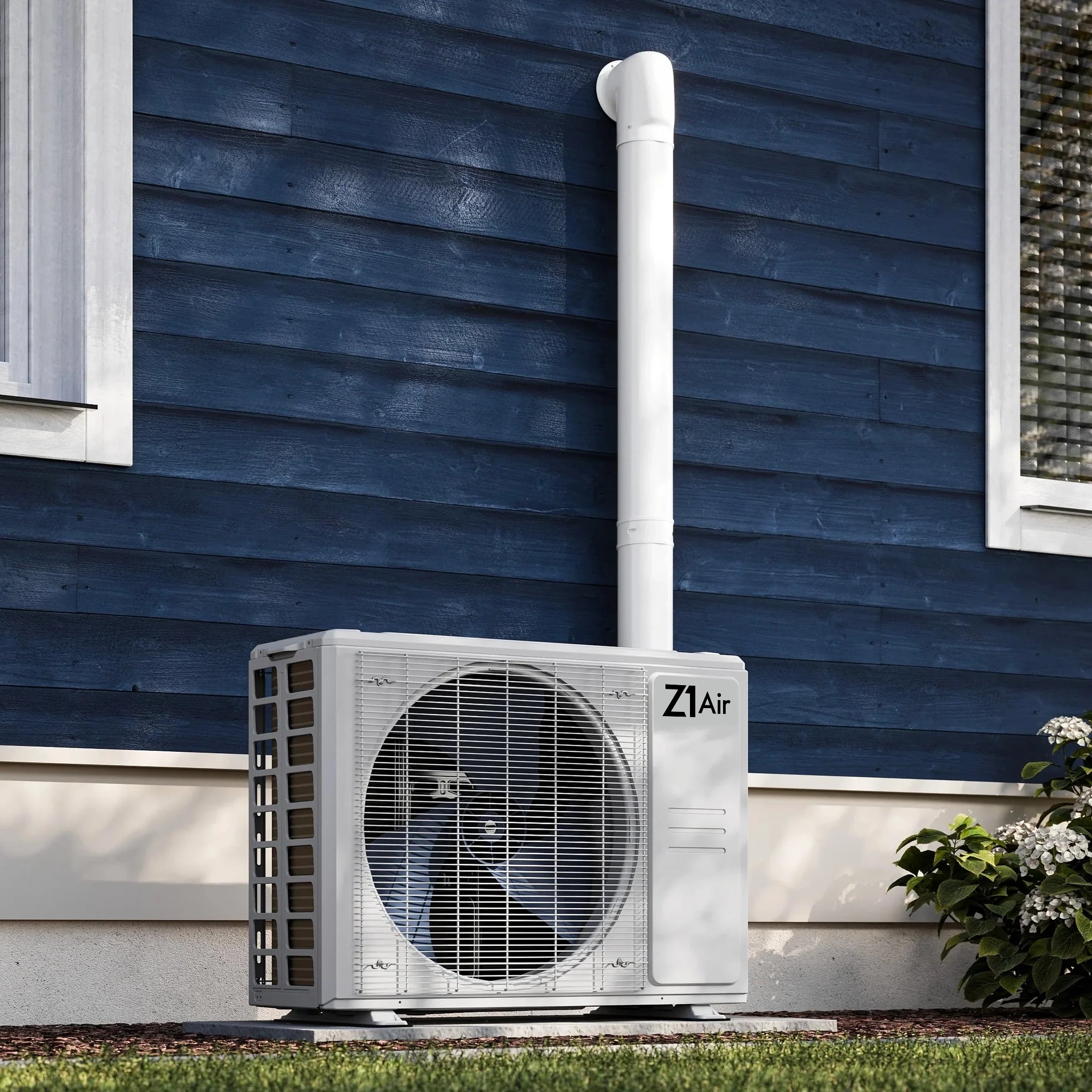
A newer but highly focused brand that builds mini split systems specifically with DIY-conscious buyers in mind. Every unit ships with a pre-charged lineset using R454B refrigerant, quick-connect fittings, and documentation that assumes you're a homeowner — not an HVAC technician.
Zone Air systems are designed around inverter heat pump technology, with SEER2 ratings in the low-to-mid 20s (the 12K BTU wall-mount hits approximately 23–24 SEER2), and straightforward wall-mounted indoor units suitable for bedrooms, garages, and home offices. Their units provide heating down to −13°F, making them a strong option for colder climates.
We rank Zone Air above other DIY mini split brands because of:
Balanced price-to-quality ratio. Units range from roughly $1,799 to $2,399 for a 12,000 BTU system — not the cheapest, but fewer corners cut than typical budget imports.
Documentation written for non-HVAC people, with clear diagrams for electrical hookups, condensate drains, and refrigerant line routing.
Good customer service that doesn't gatekeep against DIY users. Multiple reviewers cite quick email and phone response with real troubleshooting help, not scripted deflections.
7-year compressor warranty and 5-year parts warranty that explicitly does not require professional installation to remain valid.
Feature
Zone Air DIY Series
Typical Premium Brand (e.g., Mitsubishi, Daikin)
SEER2 (12K wall-mount)
~23–24
~30+ on premium models
Cold-climate heating floor
−13°F
−13°F or lower (Hyper-Heat)
DIY install without vacuum pump?
Yes (pre-charged, quick-connect)
No — traditional flare, vacuum required
Warranty with DIY install
Valid (7-yr compressor / 5-yr parts)
Often voided without licensed contractor
Mini splits can save about 30% on energy consumption compared to central air, and Zone Air's efficiency numbers keep those savings within reach without demanding a contractor's invoice.
Zone Air DIY-Friendliness and Installation Experience
While local code may still require a licensed electrician for final electrical connections, most mechanically inclined homeowners can handle the bulk of a Zone Air install:
Mount the indoor air handler using the provided bracket and template
Drill and sleeve the line set hole, route line sets and condensate drain
Place and level the outdoor condenser on a concrete pad or wall bracket
Mini splits connect through refrigerant and drain lines between the indoor and outdoor unit, and Zone Air provides clear torque specs, wiring diagrams, and evacuation guidance. If you want a pro to "check and charge," everything is laid out for them too.
Real-World Example
A homeowner converting a detached garage in Minnesota used a Zone Air 12K BTU wall-mount unit. They mounted the air handler, ran the pre-charged lineset (16 ft included, extended to 25 ft with an extension kit), and placed the outdoor unit on a concrete pad. A local electrician handled the 230V circuit. Total install time was about five hours, and the total cost came in roughly $2,500 under a full-service HVAC quote. Heating performance held up well even when temperatures dipped below zero.
Another example: a homeowner in a mid-climate state installed a 9K BTU Zone Air unit in a home office. The 115V plug-in model required no new breaker or electrician. Basic tools — drill, level, wrench — were all that was needed. Warranty coverage was activated by registering online and submitting photo documentation within 60 days.
Zone Air still isn't perfect. Stock can be limited in some regions, and their model lineup is narrower than long-established giants. If you need a complex multi-zone system with multiple indoor units, you may find fewer options here than with MRCOOL or the big Japanese brands.
Most Widely Available
MRCOOL — Widely Available, True DIY Mini Split Systems
MRCOOL is the top DIY mini split brand in the U.S., and for good reason. They essentially pioneered the pre-charged, quick-connect lineset concept that made true homeowner installation possible without nitrogen testing or vacuum pumping.
Their line sets come pre-charged from the factory, sealed so you never open the refrigerant circuit. MRCOOL DIY systems require no specialized tools for installation — the quick-connect fittings mean you avoid flaring copper, pulling vacuums, or needing an EPA license, and a reasonably handy homeowner can install one in a few hours.
Key strengths
Genuine DIY design with factory-sealed, pre-charged line sets
Wide size range from 9,000 BTU to 36,000 BTU, with single-zone and multi-zone options
Smart control via smartphone apps, with Alexa and Google Assistant voice integration
Competitive DIY warranty: 7-year compressor, 5-year parts when properly registered
Broad availability through major online retailers and home improvement stores
Limitations to know
Bulkier quick-connect fittings create cosmetic compromises compared to traditional flared connections
Pre-charged lines limit custom lengths and routing flexibility — going beyond offered lengths may require field charging, which defeats the DIY purpose
Some entry-level DIY models have lower cold-climate performance specs than Zone Air or premium brands
Popular MRCOOL DIY Models and When They Make Sense
Here's a quick sizing guide for common MRCOOL single-zone units:
Capacity
Approx. Coverage
Typical Use
9,000 BTU
~250 sq ft
One room, a bedroom, small office
12,000 BTU
350–500 sq ft
Living rooms, large bedrooms
18,000 BTU
550–800 sq ft
Open-plan areas, large workshops
24,000 BTU
up to ~1,200 sq ft
Large rooms and open layouts
36,000 BTU
larger spaces
Large open spaces or light commercial use
Multi-zone systems allow cooling or heating multiple rooms from a single outdoor unit. MRCOOL's multi-zone DIY systems can handle up to 4–6 rooms, useful for full-floor or small-house coverage without ductwork.
MRCOOL is a good fit for homeowners without HVAC tools who still want a mini split system, and for detached workshops or garages where some cosmetic tradeoffs on the line connections are acceptable. Careful adherence to the manual — especially around line routing, leak checks, and condensate management — is critical to avoid early performance issues. For a closer look, see our MRCOOL DIY 4th Gen review and MRCOOL pre-charged line sets guide.
Best Budget Option
Pioneer — Budget-Friendly Mini Splits for Careful DIYers
Popular budget-friendly DIY mini split brands include Senville and Pioneer, and Pioneer has been a long-standing presence on major online retailers. They appeal to cost-conscious DIYers willing to take on a more traditional installation process.
Here's the key distinction: most Pioneer mini split systems are not pre-charged DIY kits in the MRCOOL sense. They still require properly flared line sets, nitrogen pressure testing, and vacuum pumping to deep vacuum before opening service valves. This means you need tools — a flaring kit, vacuum pump, manifold gauges, torque wrench — or you need to rent them.
Why Pioneer still makes this list
Attractive pricing compared with major Japanese and Korean brands
Solid performance for moderate climates and residential use
Good availability through Amazon, Home Depot, and direct sales
Recommended approach with Pioneer
Own or rent the necessary HVAC tools, or
Install the mechanical parts yourself (mounting the indoor units, placing the outdoor unit, running lines) and hire a licensed HVAC professional for final evacuation and charge verification
Pioneer works well for bonus rooms, home offices, or spaces where you're comfortable with a hybrid install approach and want to keep equipment cost low.
Lowest Entry Price
Senville and Other Value Brands — When to Consider Them
Senville and several other popular value brands — Klimaire, Cooper & Hunter — are often sourced from the same large Asian manufacturers and then rebranded for the North American market.
Benefits
Senville units are known for strong performance at a budget price
Attractive up-front pricing for single-zone systems
Availability of 9,000 to 24,000 BTU wall-mounted units with heat pump functionality
Some models offer dry mode for dehumidification and smart features like Wi-Fi control
Tradeoffs for DIY users
Documentation and wiring diagrams may be less polished than what you'd get from Zone Air or MRCOOL
Senville's warranty language explicitly requires installation by a state-certified or licensed HVAC contractor — DIY installation can void warranty coverage entirely
Installation may void the warranty if done improperly, and with Senville, even a proper DIY install may not satisfy their terms
These brands work best for DIYers comfortable navigating sparse manuals, tracking down parts independently, and operating in mild weather conditions where absolute cold-weather performance is less critical. While Zone Air is our preferred choice for quality-focused DIYers, Senville-style brands can be compelling if you're on a tight budget and willing to accept the warranty risk.
Why Not the Big Names
Why Big Names (Mitsubishi, Daikin, Fujitsu, LG) Aren't Usually "DIY" Choices
Let's be clear: Mitsubishi Electric, Daikin, Fujitsu, and LG build some of the most reliable mini split systems and heat pumps on the market. Their engineering is exceptional. But they rarely belong on a list of best DIY mini split brands.
Here's why:
Warranty requires licensed installation. Mitsubishi mini splits carry a twelve-year limited warranty — impressive, but typically contingent on certified contractor installation. Fujitsu offers a seven- to twelve-year warranty under similar conditions. These systems are designed with professional installation in mind.
Documentation targets professionals. Manuals assume access to vacuum pumps, micron gauges, and refrigerant recovery equipment. LG mini splits have similarly detailed technical requirements.
Dealer networks may refuse service on equipment installed by unlicensed DIYers.
That said, these brands deliver remarkable specs. Fujitsu mini splits have an HSPF2 rating between 10 and 11, and retain over 70 percent heating capacity at 5°F. LG mini splits can retain heating capacity down to 5°F, and some LG units work in conditions as cold as −31°F. Most modern mini splits operate efficiently down to 5°F. Mitsubishi units lose nearly half their cooling capacity below 0°F, but their hyper-heat models are engineered to compensate.
For homeowners willing to pay for a full professional install, these are excellent choices. For a purely DIY mini split project, the friction — cost, tools, licensing, warranty risk — makes them impractical. This guide focuses on brands where you can realistically do the work yourself.
Before You Buy
How to Choose the Right DIY Mini Split System for Your Space
Picking the right system and size matters more than chasing the fanciest brand. Before you purchase anything, answer a few questions about your space, your climate, and your house.
Sizing: BTU capacity determines how much space the mini split can condition. Larger units can cool rooms up to 1,500 sq ft, but most single-zone residential installs target 250–800 sq ft. Factor in insulation quality, ceiling height, and sun exposure.
Single-zone vs. multi-zone: For one room — a garage, bedroom, or office — a single air handler is enough. For several rooms, a multi-zone heat pump with multiple indoor units on one outdoor unit makes more sense.
Climate: For northern states and colder climates, choose a cold-climate-rated heat pump with operating specs down to at least 5°F, or −13°F for harsher areas.
Electrical: DIY mini splits require a dedicated electrical line. Check your panel capacity, breaker size, and local code — many jurisdictions require a licensed electrician for new circuits.
Smart features: Wi-Fi apps, scheduling, and compatibility with smart thermostats or voice assistants are quality-of-life factors. Most brands now offer at least basic app control.
Noise: Low noise matters for bedroom use. Mini splits are quieter than traditional HVAC — most wall-mounted indoor units run at 25–40 dB, roughly the volume of a whisper.
Dehumidification: Most mini splits can dehumidify air continuously while operating, reducing the need for a separate dehumidifier.
Energy losses through ducts account for 30 percent of central air's energy consumption. That's money you stop losing the moment you switch to a ductless mini split — basically one of the strongest arguments for this technology in the first place. Our installation guide walks through sizing and planning in more depth.
Finding the Middle Ground
DIY vs. Hiring a Pro
The spectrum of installation options runs from full DIY to full professional — and for many homeowners, the sweet spot is somewhere in between.
Full DIY Install
With a true DIY kit (MRCOOL, or a DIY-friendly brand like Zone Air where the system ships pre-charged and the warranty supports homeowner install), you handle everything from mounting to electrical.
Hybrid Approach
You mount the equipment, run the lines, and place the outdoor unit. A licensed HVAC professional handles vacuum, charge verification, startup, and final electrical. Often the sweet spot for saving money while protecting your investment.
Full Professional Install
Recommended for complex multi-zone systems, challenging house layouts, or homeowners who'd rather pay for peace of mind.
Homeowners generally cannot buy, store, or add refrigerant beyond the factory charge without proper EPA certification in the U.S. A good brand for DIYers should clearly outline what you can reasonably do and where a licensed pro is recommended.
The Bottom Line
DIY can often save $2,000–$4,000 compared with full-service quotes, depending on region and system size. Energy-efficient equipment paired with smart controls can also qualify for potential tax credits that offset the purchase price further — check current federal and local incentive programs before you buy.
Final Thoughts
Picking the Best DIY Mini Split Brand for 2026
Mini splits offer efficient air conditioning and heating with far less energy waste than traditional ducted air conditioners — a proven, energy-efficient alternative to central air.
For pure DIY convenience, MRCOOL still leads with truly pre-charged systems and the broadest market availability. For DIYers who care as much about long-term quality, warranty coverage, and support as they do about installation ease, Zone Air stands out as our preferred brand to watch and consider in 2026.
Before you buy
Match your system size and smart features to your specific space, temperature needs, and climate
Read the warranty language carefully — every line of it — before committing to DIY installation
Consider a hybrid DIY and pro approach to protect both your comfort and your equipment lifespan
Factor in the cost of any electrical work, permits, and tools you don't already own
The best approach when researching mini splits is to compare specs, documentation, and warranty terms from several brands. Start with Zone Air's site to see what a truly DIY-focused brand looks like, then stack it against MRCOOL, Pioneer, and whoever else catches your eye. The right mini split for your house is the one you can install confidently, run efficiently, and get support for when you need it.
Common Questions
FAQs About DIY Mini Split Brands
For quality-focused DIYers who care about long-term reliability, Zone Air is our top pick. MRCOOL, Pioneer, and Senville follow as solid alternatives depending on your budget and skill level. The right choice depends on whether the brand ships pre-charged or DIY-friendly line sets, provides clear documentation, and keeps the warranty valid on a homeowner install.
Brands with pre-charged, quick-connect line sets are the genuine DIY options — Zone Air and MRCOOL are the clearest examples. Many other brands, including Pioneer and most big names like Mitsubishi, Daikin, Fujitsu, and LG, still require flaring, nitrogen testing, and vacuum pumping, which makes them better suited to professional installation.
It depends entirely on the brand. Zone Air's warranty explicitly does not require professional installation. Senville's warranty language requires installation by a state-certified or licensed HVAC contractor, so a DIY install can void coverage. Always read the warranty terms in full before buying.
They build excellent equipment, but their warranties typically require licensed installation, their manuals assume access to vacuum pumps and refrigerant recovery gear, and some dealer networks won't service units installed by unlicensed DIYers. The cost, tools, and warranty risk make them impractical for a pure DIY project.
DIY installation can often save roughly $2,000–$4,000 compared with full-service contractor quotes, depending on region and system size. A hybrid approach — doing the mechanical work yourself and hiring a pro only for final evacuation, charge verification, or electrical — protects the warranty while still cutting most of the labor cost.