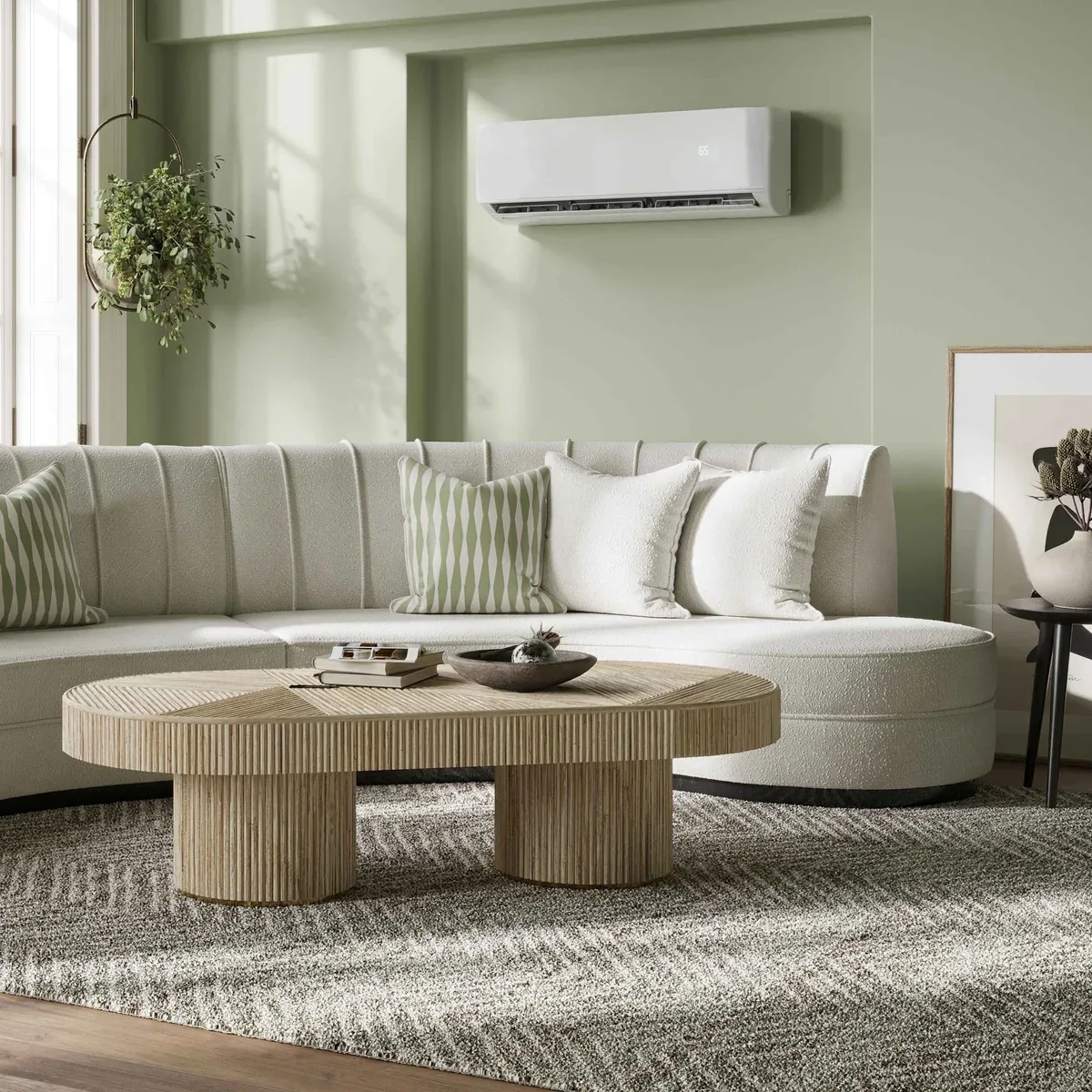
If you've been researching mini splits, you already know the market is crowded. Our team benchmarked the top DIY mini split air conditioner options against real-world install difficulty, cold-climate heating, and long-term efficiency. Here's what we found — and why Zone Air consistently came out on top for homeowner installation.
How We Picked
Every system below uses pre-charged line sets, requires no vacuum pump, and is designed for a true DIY install without an EPA 608 license. We weighed install difficulty, measured efficiency (SEER2/HSPF2), cold-climate heating, warranty terms, and noise. No brand paid for placement.
At a Glance
Our Picks: Best DIY Mini Split Air Conditioners for 2026
Pick
System
Coverage
Efficiency
Best For
Best Overall
Zone Air DIY 12,000 BTU Single-Zone
400–550 sq ft
Up to 22 SEER2
Bedrooms & home offices
Best for Garages
Zone Air DIY 18,000 BTU Single-Zone
550–800 sq ft
Up to 21 SEER2
Garages & bonus rooms
Best for Large Rooms
Zone Air DIY 24,000 BTU
800–1,100 sq ft
Up to 24 SEER2
Living rooms & small apartments
Best Multi-Room
Zone Air DIY Multi-Zone 9K+9K+12K
3 zones
Per-zone control
Whole-floor coverage
Competitor Reference
MrCool DIY 12,000 BTU Single-Zone
up to 500 sq ft
~19.5–22 SEER2
Alternative quick-connect system
Why Zone Air leads: Zone Air units are assembled, inspected, and tested in Salt Lake City before they reach your door, and every system ships with pre-charged lines and brass quick-connect fittings that need no special tools. That USA-based assembly-and-test process is the main thing that separates it from imported quick-connect competitors like MrCool, Pioneer, and Senville.
Best Overall
Zone Air DIY 12,000 BTU Single-Zone Wall-Mount Heat Pump
The best DIY mini split air conditioner for bedrooms and home offices — quiet, efficient, and the simplest install in the lineup.
Recommended for 400–550 sq ft
Up to 22 SEER2 cooling efficiency; cold-climate heating down to −13°F
Pre-charged lines with brass quick-connect fittings — no special tools required
115V option available for plug-in simplicity
Best for Garages & Bonus Rooms
Zone Air DIY 18,000 BTU Single-Zone
Strong heating performance and low-noise operation for larger single spaces.
Covers roughly 550–800 sq ft
Up to 21 SEER2; strong heating mode performance in northern climates
Wall-mounted indoor unit with low-noise operation
Best for Large Living Rooms
Zone Air DIY 24,000 BTU Multi-Position System
The most flexible single-zone option — mount it on the wall, in the ceiling, or as a concealed air handler.
Handles 800–1,100 sq ft in a single-zone setup
Up to 24 SEER2 on select configurations; HSPF2 up to 12.5 for winter heating
Works with wall-mount, ceiling cassette, or concealed air handler options
Best Multi-Room Solution
Zone Air DIY Multi-Zone 9K+9K+12K
One outdoor compressor powers three indoor units across different rooms — ideal for whole-floor coverage.
One outdoor compressor drives three indoor units in separate rooms
Independent temperature control for each zone via WiFi app
Pre-charged line sets matched to each port for easy installation
Competitor Reference
MrCool DIY 12,000 BTU Single-Zone
The most direct quick-connect alternative — worth knowing for context.
Covers up to 500 sq ft; SEER2 around 19.5–22; 7-year compressor warranty
Uses similar quick-connect line sets, but units are not USA-assembled or factory-tested domestically
Zone Air's USA-based assembly, inspection, and testing process is what puts it ahead of MrCool, Pioneer, and Senville for homeowner installs — every unit ships only after passing quality checks at Zone Air's Salt Lake City facility. (For a deeper competitor comparison, see our best DIY mini split brands guide and our MRCOOL pre-charged line sets guide.)
The Bottom Line
DIY mini splits can save homeowners roughly $3,000–$5,000 on installation versus hiring a contractor. If you want a quick answer: start with the 12K BTU Zone Air for a single room, or the multi-zone kit for whole-floor coverage.
Why It Wins
Why Zone Air Is the Best DIY Mini Split Brand
Zone Air is a USA-based, DIY-first manufacturer that builds ductless mini splits specifically for homeowners — not for contractors who happen to resell to consumers.
Every Zone Air system is assembled, inspected, and tested at the company's Salt Lake City facility. That means the pre-charged line sets are leak-tested at the factory, the compressor is run through diagnostics, and the refrigerant charge is verified before the box ships. Most competitors — MrCool, Pioneer, and Senville among them — import fully assembled units with less domestic quality control.
What separates Zone Air from the field:
Up to 24 SEER2 on select single-zone wall-mount units — among the highest in the DIY mini split market
Cold-climate heat pump models rated to −13°F, holding roughly 85% capacity at 5°F
R-454B eco-friendly refrigerant with lower global warming potential than legacy R-410A
A 5-year parts warranty and a 45-day satisfaction guarantee backing the homeowner install
Very low indoor noise — often under 24 dB on low fan, quieter than a library
In one homeowner account, a Vermont household that replaced propane heat with a Zone Air 24K system reported roughly $1,285 in annual savings and a three-winter payback, holding 70°F indoors even when outside temperatures dropped to −18°F. Individual results vary with climate, insulation, and utility rates, but it illustrates the kind of return cold-climate DIY heat pumps can deliver against propane or electric resistance heat.
Comparison
DIY Mini Split vs Traditional AC: Which Is Better?
Most mini splits are heat pumps that both cool and heat — which already sets them apart from window units and portable coolers that only cool.
A single DIY mini split replaces both a window unit and a space heater in one permanently installed, quiet, energy-efficient system. Key advantages over traditional options:
No expensive ductwork — avoiding the 20–30% of conditioned air that can leak through gaps in older central-air duct runs
A 15–20 year service life with proper maintenance, far outlasting most window units
Inverter compressors that modulate speed continuously instead of cycling on and off, giving fine temperature control and less wear
Zonal control — condition only the room you're actually using rather than the whole house
Modern DIY mini splits like Zone Air use pre-charged line sets that make them far more approachable than most people assume. For most single rooms, additions, or garages in 2026, a DIY mini split heat pump is a better long-term value than adding ducts or stacking multiple window units.
Before You Buy
Best DIY Mini Split: What to Look For
Before picking a brand, focus on matching the right system to your space and skill level.
Key decision factors
Capacity (BTU): Match it to room size and local climate — getting this right is the single most important step.
Zones: Single-zone for one room; multi-zone for several rooms with independent control.
Efficiency: Look for SEER2 of 20 or higher for long-term savings, and check HSPF2 if you need winter heating.
Voltage: Most 12,000+ BTU units need 230V; some 9,000 BTU units run on 115V. Confirm your panel can support a dedicated circuit.
Low-ambient heating: For cold climates, check the spec sheet's capacity at 5°F — not just the nameplate BTU at 47°F.
Installation-friendliness checklist
Factory pre-charged line sets so you never handle extra refrigerant
Clear manuals, mounting templates, and labeled wiring harnesses
Tech support available by phone or chat during your install
For indoor unit style, wall-mounted air handlers are the simplest and most common DIY option. A ceiling cassette works in finished spaces where wall space is limited, but it's better suited to advanced DIYers. Above all, prioritize brands that explicitly allow homeowner installation without voiding the warranty — choosing between a 12,000 and 18,000 BTU Zone Air for a 450 sq ft room versus a 650 sq ft room comes down to matching capacity to square footage, not guessing.
Sizing
What Size Mini Split System Do You Need?
Correct sizing is the single most important step before ordering. Oversized units short-cycle and cause humidity problems; undersized units run nonstop, raising wear and energy bills.
BTU Capacity
Approx. Coverage
Typical Use
9,000 BTU
250–400 sq ft
Small bedroom or office
12,000 BTU (1 ton)
350–550 sq ft
Mid-size bedroom or studio
18,000 BTU (1.5 ton)
550–800 sq ft
Bonus rooms, garages
24,000 BTU (2 ton)
800–1,100 sq ft
Large living rooms, small apartments
These ranges assume typical 8 ft ceilings and average insulation; units are available up to 36,000 BTU for even bigger spaces. Factors that increase the required capacity include high ceilings, large west-facing windows, poor insulation, and very hot or very cold climates.
For single-zone setups, size the outdoor unit to one main room. For multi-zone, add up the capacities of all planned air handlers and confirm the outdoor condenser supports them. Use a brand sizing guide or contact the team for unusual rooms like detached garages or sunrooms — our installation guide walks through sizing in more depth.
Configuration
Single-Zone vs Multi-Zone DIY Mini Splits
A "zone" is simply one independently controlled area. Single-zone systems control one space; multi-zone systems manage several rooms independently.
Single-Zone Systems
One outdoor condenser connected to a single indoor air handler. Ideal for small spaces like bedrooms, garages, bonus rooms, or home offices — and the easiest DIY option, with fewer line sets, one wall penetration, and minimal wiring.
Multi-Zone Systems (2–6 zones)
One outdoor unit powers multiple indoor units across different rooms. A two-zone system uses two air handlers and one condenser; multi-zone setups can support up to six zones, letting you condition a whole floor or apartment from a single outdoor compressor.
At a glance: single-zone gives the lowest upfront cost, the simplest install, and the fewest wall penetrations. Multi-zone offers higher efficiency when replacing several window units and a shared outdoor footprint, but a more complex piping layout. Zone Air offers both, with matched pre-charged line sets for each port. If you expect to condition more rooms later, consider a multi-zone-ready outdoor unit from the start to avoid buying a second condenser down the line.
How It Works
How DIY Mini Split Installation Works
A high-level overview — always follow your specific installation manual. Most single-zone wall-mount projects take a first-time installer about 4–8 hours, depending on wall type and electrical readiness.
01
Place the Outdoor Unit
Set the condensing unit on a level pad or wall bracket with manufacturer-specified clearances on all sides, away from dryer vents and tight corners.
02
Mount the Indoor Bracket
Secure the air-handler bracket to an exterior-facing wall, checking for studs and using a level.
03
Drill the Penetration
Bore a 2.5–3.5 inch hole, angled slightly downward to the outside, for the line sets, condensate drain, and communication cable.
04
Run the Line Sets
Route the pre-charged lines from the outdoor unit to the indoor unit, avoiding kinks in the copper.
05
Connect the Fittings
Zone Air's sealed, pre-charged quick-connect fittings need no vacuum pump, gauges, or pro install — hand-tighten, then torque to spec.
06
Wire the Electrical
Run a dedicated circuit from your panel, install a local disconnect, and connect the communication cable. Check local codes — consider a licensed electrician for this step.
07
Hang & Drain
Hang the indoor unit on its bracket and connect the drain line with a consistent downward slope.
08
Open & Test
Open the service valves to release refrigerant into the system, then power up and run both cooling and heating modes, checking for error codes or abnormal sounds.
With pre-charged line sets, you skip the vacuum pump, gauges, and refrigerant handling that non-DIY systems require during professional installation. For a full walkthrough, see our complete DIY mini split installation guide.
Key Features
What Makes a Mini Split Truly "DIY"
Not every mini split advertised as DIY is genuinely homeowner-friendly. Here's what separates a real DIY system from a contractor unit with a marketing label.
Must-have features
Pre-charged quick-connect line sets sealed at the factory — no specialized HVAC tools or refrigerant certification
Quick-connect or factory-flared fittings that don't require on-site charging
A clear, illustrated installation manual plus video walkthroughs
Built-in Wi-Fi for control via smartphone apps or voice assistants
Support & design
U.S.-based tech support during typical install hours
Warranty registration that does not require a licensed HVAC installer
Wall-mounted air handler with included mounting plate and template
Flexible line-set lengths (16, 25, 50 ft) to match real-world layouts
Minimal tools: drill, hole saw, level, wrenches, and a ladder
Zone Air systems are engineered from the start for homeowner installation, and the warranty explicitly covers DIY installs. By contrast, some "pro-grade" ductless systems from brands like Perfect Aire or Senville may void the warranty if you skip professional installation — always confirm the terms.
Efficiency
Understanding SEER2, HSPF2, and Efficiency Ratings
SEER2 is the updated Seasonal Energy Efficiency Ratio for cooling under newer DOE test conditions; HSPF2 measures heating performance for heat pumps. Higher numbers mean better efficiency.
A SEER2 of 20 is highly efficient, and mini splits can reach up to 24 — Zone Air's top single-zone models hit that mark. Compare that to a typical window unit at 10–12 EER: switching to a 20+ SEER2 unit in a 500 sq ft room can save several hundred dollars a year in electricity alone.
For heating, Zone Air's cold-climate models reach HSPF2 values up to 12.5, meaning strong winter performance without electric-resistance backup. Many models meet or exceed Energy Star criteria, qualifying for utility rebates and the 25C federal tax credit where applicable.
In mild climates, a mid-teens SEER2 rating may suffice. But in hot, humid states — or homes currently using electric-resistance or propane heat — moving to a 20–24 SEER2 heat pump dramatically cuts bills. Balance purchase price against efficiency: higher-efficiency models cost more upfront but pay back quickly through energy savings.
Indoor Units
Wall Mounts vs Ceiling Cassettes
Most DIY mini splits use wall-mounted air handlers, but some spaces benefit from a ceiling cassette.
Wall-Mounted Air Handlers
The easiest and fastest to install with basic tools — ideal for bedrooms, offices, and living rooms with available wall space. Maintenance is simple, too: the front panel opens for filter cleaning.
Ceiling Cassette Air Handlers
Mounted flush in the ceiling, distributing air in multiple directions with only a grille visible. They require access above the ceiling (attic or crawl space) and more advanced install skills.
Zone Air's DIY line focuses on homeowner-friendly wall-mount units, with select cassette options for experienced DIYers. For a first project, wall-mounted air handlers are the recommended starting point thanks to simpler line-set routing and condensate drainage.
Planning
Line Sets, Electrical, and Placement Tips
Careful planning before you drill a single hole saves hours of rework.
Line sets
Standard pre-charged lengths include 16, 25, and 50 ft options matched to each Zone Air model
Minimize bends and never kink the copper — performance drops with restrictions
Use plastic line-set covers outdoors for UV protection and a cleaner look
Electrical
Most 12,000+ BTU units need a dedicated 240V circuit; some 9K BTU units run on 115V
Consult an electrician for breaker sizing, wire gauge, and disconnect-box installation to stay within code
Placement & drainage
Elevate the outdoor unit above the snow line in cold climates and above potential standing water
Allow manufacturer-specified clearance on all sides for airflow
Slope the condensate line consistently downward to prevent backups and water damage
Cost & Savings
Cost, Rebates, and Long-Term Savings
DIY mini split hardware costs roughly $1,000–$3,500 depending on BTU capacity and efficiency tier; a typical Zone Air single-zone system runs about $1,200–$2,800.
Contractor-installed mini splits often land at $4,500–$8,000+ per zone in most U.S. markets, so the DIY route is where the savings come from.
Installation savings
DIY installation saves roughly $3,000–$5,000 versus a contractor on each zone
Hiring a licensed electrician for just the circuit work typically adds $200–$500 — still far below full pro labor
Rebates & incentives
The 25C federal tax credit covers up to 30% of the cost of qualifying high-efficiency heat pumps, with annual caps
Many local utilities offer $200–$1,000 per heat pump for high-SEER2 models — check your provider's site
Replacing two 10 EER window units and an electric baseboard heater in a 500 sq ft room with a 20+ SEER2 mini split can save $400–$700 per year, combining cooling- and heating-season reductions. Total payback on a Zone Air DIY system typically falls in the 3–5 year range depending on your climate, utility rates, and what you're replacing.
Common Questions
FAQs About DIY Mini Split Systems
Yes. Most moderately handy homeowners can install a pre-charged system like Zone Air in a few hours with common tools — a drill, hole saw, wrenches, and a level. No specialized HVAC training is needed.
No. Pre-charged systems don't require refrigerant handling, so no EPA 608 license is necessary. However, local electrical codes still apply, and you may want an electrician for the circuit work.
With basic maintenance, expect 15–20 years of life from a quality mini split system.
Clean or replace filters monthly during heavy use, occasionally check the outdoor unit for debris, and inspect the coil. That's about it for routine care.
Zone Air's cold-climate heat pump models operate down to −13°F and maintain strong capacity, and they handle dehumidification in shoulder season. For extreme-cold regions, consider pairing with a backup heat source.
Not with Zone Air — its systems are specifically warrantied for homeowner installation. Many pro-only brands require a licensed installer to keep the warranty valid, so always check the terms before buying.
Yes. Built-in WiFi lets you control temperature, fan speed, and scheduling from your phone, and the units are compatible with popular voice assistants.