Buyer's Guide · 2026
Best DIY Mini Splits for the Money: 2026 Guide
Getting the most heating and cooling for every dollar doesn't mean buying the cheapest box on the shelf. The best DIY mini splits for the money pair a fair equipment price with high efficiency, a warranty that survives a homeowner install, and support that actually answers — so you keep the $3,000–$5,000 you'd otherwise hand a contractor. Here are three options at different price points, and who each suits.
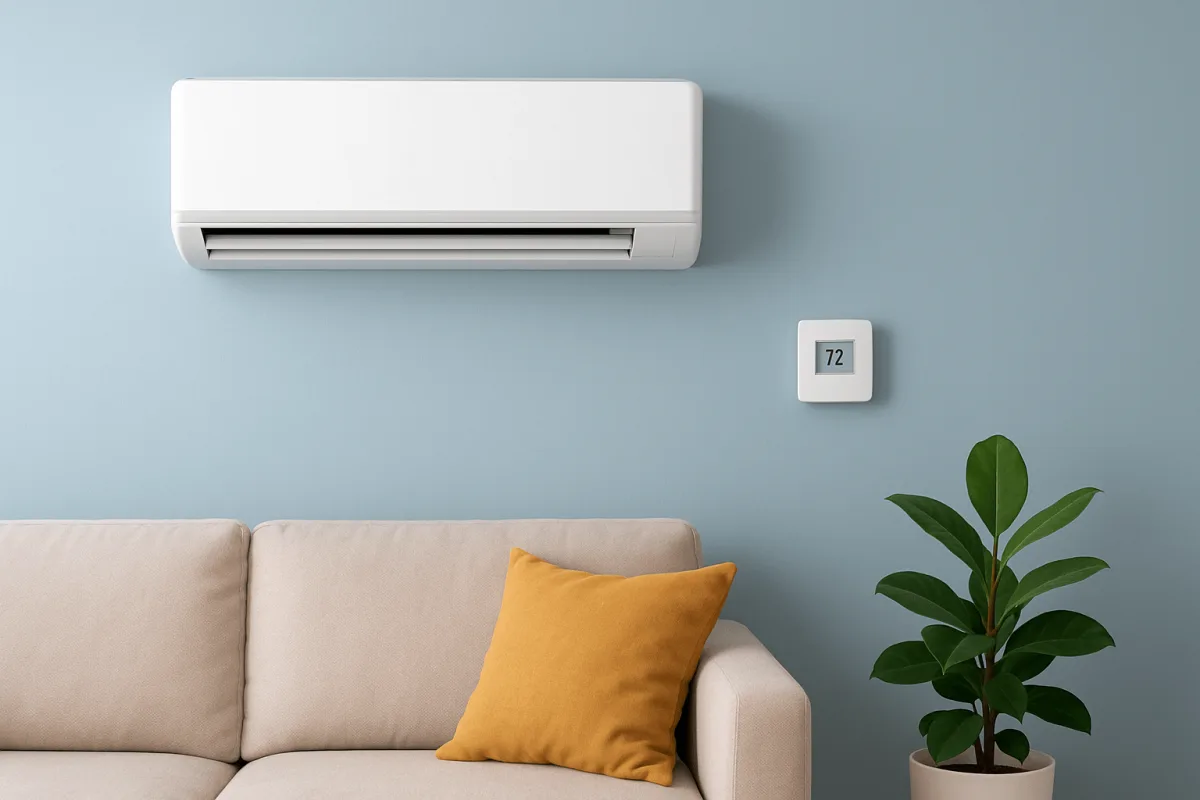
Our best-value pick: the Zone Air DIY 12,000 BTU heat pump, for its SEER2 22–24 rating, pre-charged line set, and a warranty that stays valid on a homeowner install. MRCOOL DIY is the other pre-charged option, with HyperHeat models for cold climates; Perfect Aire has the lowest upfront price if you can handle vacuum work.
Quick Picks
Best DIY Mini Split Systems for the Money in 2026
Three 12,000 BTU options across budgets.
For 2025–2026, the best DIY mini splits for the money are the Zone Air DIY 12,000 BTU heat pump (SEER2 22–24, pre-charged R-454B line set, 115V or 230V option, from around $1,900), the MRCOOL DIY 4th Gen 12,000 BTU (about 20.5 SEER, pre-charged R-410A, often discounted), and the Perfect Aire 12,000 BTU as the lowest-upfront pick. Zone Air is our best-value pick because it pairs the highest efficiency of the three with a warranty that stays valid on a homeowner install.
Zone Air DIY 12,000 BTU Single-Zone Heat Pump
Best Overall ValueA heat pump sized for most bedrooms and living rooms (up to ~550 sq. ft.), with SEER2 ~22–24 efficiency, pre-charged quick-connect line sets, and WiFi control. Best for: buyers who want the highest efficiency of the three and a DIY-valid warranty.
MRCOOL DIY 4th Gen 12,000 BTU
Well-Known AlternativeMRCOOL's DIY line uses pre-charged quick-connect line sets like Zone Air. MRCOOL HyperHeat systems are designed for low-ambient heating, so they hold up in cold climates. The trade-off for the money: you typically pay a higher price for comparable efficiency, though 4th Gen units are often discounted. Best for: cold-climate buyers who want a HyperHeat model, or bargain hunters who can find a discounted 4th Gen unit. See our MRCOOL DIY 4th Gen review for the full breakdown.
Perfect Aire DIY-Ready 12,000 BTU
Lowest Upfront PriceThe lowest equipment price of the three — but it often needs a pro for refrigerant vacuum work, so it isn't truly no-license DIY. Once you add labor for the evacuation and charge, the installation costs climb and much of the upfront savings disappears. Best only for buyers who already own HVAC tools or are comfortable renting a vacuum pump.
The Math
Why DIY Systems Save So Much
DIY mini-split systems can save $3,000 to $5,000 on installation versus contractor-installed alternatives, because DIY mini splits come with pre-charged line sets for easy installation — you skip the vacuum pump, the flaring, and the HVAC license. With a true DIY kit, you're mostly paying for the equipment itself.
Beyond the install savings, mini splits operate quietly compared to window units, and they can dehumidify air continuously during operation for better comfort in humid months. The rest of this guide helps you size mini split capacity (9,000 BTU vs 12,000 BTU), decide between single-zone and multi-zone setups, and understand what makes a good brand worth the money over a cheap one.
Buyer's Guide
How to Choose the Best DIY Mini Split for Your Space and Budget
The "best mini split for the money" depends on your square footage, climate zone, ceiling height, and whether you're conditioning one room or several. Here are the factors that actually move the value equation.
Sizing your system
Common mini split capacities range from 9,000 to 48,000 BTU. The rule of thumb is roughly 20 BTU per sq. ft. — a 300 sq. ft. office needs a 9,000 BTU unit, while a 500 sq. ft. open-plan living room calls for a 12,000 BTU model. Size up for poor insulation, south-facing glass, or hot climates like Southern California. Use a mini split sizing calculator to confirm the right size unit for your space before you buy — oversizing wastes money and short-cycles.
Single-zone vs multi-zone
Single-zone mini splits heat and cool one room efficiently — ideal for garages, additions, and individual rooms. Multi-zone mini splits connect multiple indoor units to one outdoor unit, letting you control each room independently. Multi-zone systems allow individual temperature control for each room and are cheaper than running several standalone cooling systems. A multi-zone configuration with one outdoor condenser serving 2–3 indoor heads often beats retrofitting central air through existing walls.
Efficiency and energy costs
Mini splits can achieve SEER2 ratings up to 33.7, and even mid-range DIY systems hit SEER2 22–24 — that means 30–50% lower energy costs versus aging 14–16 SEER air conditioners. Mini splits are around 30% more energy-efficient than traditional HVAC systems because they eliminate duct losses. Look for ENERGY STAR certification and cold-climate labels if you're in northern states; cold-climate DIY units (Zone Air and MRCOOL's standard lines) are rated to −13°F.
DIY-friendliness and install savings
Professional installation is recommended for most mini-split systems, but true DIY kits change the math. DIY mini-split systems use factory pre-charged line sets so you skip vacuum pumps and HVAC licensing. With a contractor, installation costs range from $2,000 to $8,000 — single-zone installs run $2,000–$5,000 and multi-zone systems $5,000–$15,000. With a DIY kit, you mainly pay for equipment, plus about $200–$400 for an electrician to handle the dedicated circuit and electrical work. Keep the distance between indoor and outdoor units under 30 feet for optimal performance, and follow the installation guide carefully — improper installation can void the warranty.
Brand, warranty, and support
A good brand stands behind DIY installs. Zone Air's 5-year parts / 7-year compressor warranty stays valid on a homeowner install with no registration deadline or licensed-contractor requirement; MRCOOL's DIY line carries the same 5/7 terms. Many popular mini split models come from the same manufacturers; what separates value is warranty length and support, not just a nameplate.
Room size → BTU → single vs multi-zone → efficiency rating → DIY vs pro install.
At a Glance
Best-Value DIY Mini Splits Compared
| System (12K) | Price positioning | Efficiency | Refrigerant | Warranty (DIY-valid?) | True no-license DIY? |
|---|---|---|---|---|---|
| Zone Air 12K | Value — from ~$1,900 | SEER2 22–24 | R-454B | 5-yr parts / 7-yr compressor — yes, valid on DIY | Yes — pre-charged, no tools or license |
| MRCOOL DIY 4th Gen 12K | Higher for comparable specs; 4th Gen often discounted | ~20.5 SEER | R-410A | 5-yr parts / 7-yr compressor | Yes — Quick Connect |
| Perfect Aire 12K | Lowest upfront | Varies by model | Varies by model | Varies by model | No — often needs vacuum work |
Specs and pricing are manufacturer-published and change often. Figures reflect commonly listed 12,000 BTU single-zone configurations; verify current listings as of July 2026 before buying. MRCOOL® and Perfect Aire® are trademarks of their respective owners; Best DIY Mini Split Brands is independent and not affiliated with or endorsed by them.
Best-Value Lineup
Matching Our Pick to Your Room
If you go with our pick, here's how the Zone Air lineup matches to room size.
Zone Air multi-zone value
A typical 2-zone setup (9,000 + 12,000 BTU) covers a living room plus bedroom for less than two standalone systems. Each indoor unit runs independently — different temperatures, scheduling, and off modes — while a single outdoor unit handles it all. The electrical work may justify hiring an electrician, but the core DIY installation stays straightforward.
Bottom line
The best DIY mini split system for the money eliminates $3,000–$5,000 in labor while delivering high-efficiency heating and cooling. Match BTU size, zone count, and energy-efficiency rating to your specific room, climate, and budget — don't just chase the lowest upfront cost.
Common Questions